

Spreadsheets are useful for managing budgets, tracking sales, organizing customer information and preparing reports. For a small business, they can be a simple and affordable way to manage daily operations.
However, as a business grows, its processes become more complex. Multiple files, manual updates and disconnected information can make everyday tasks slower and harder to manage.
So, when should a business consider moving beyond spreadsheets? Here are six signs that it may be time to explore custom business software.
1. Your Team Enters the Same Data Multiple Times

When employees maintain separate spreadsheets for sales, inventory, accounts and customer information, the same details may need to be entered repeatedly.
This wastes time and increases the risk of inconsistent records.
A tailored software solution can help connect relevant workflows and reduce repetitive data entry, allowing employees to spend more time on meaningful work.
2. Errors and Outdated Information Are Becoming Common

A small formula error or an overlooked update can affect calculations, reports and business decisions. When multiple employees work with different file versions, identifying the correct information becomes even harder.
Business software can centralize records, apply validation rules and maintain consistent information across connected processes.
The result is better control over business data and fewer opportunities for avoidable manual mistakes.
3. Preparing Reports Takes Too Much Time
Do employees spend hours collecting information from different spreadsheets before preparing weekly or monthly reports?
If managers cannot quickly understand sales performance, expenses, inventory or project progress, decision-making may become unnecessarily slow.
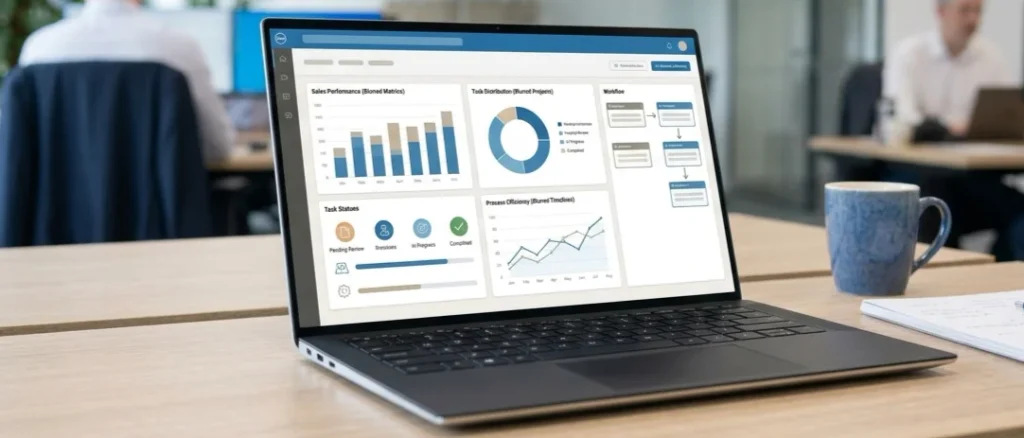
Custom business software can bring relevant information together and generate reports or dashboards based on business requirements.
4. Collaboration Has Become Difficult

Spreadsheets become harder to manage when several departments need access to the same information.
Teams may create duplicate files, overwrite updates or struggle to identify the latest version. Sensitive information can also require more careful access management.
A suitable business application can provide role-based permissions, shared records and clearer workflows, helping teams work from consistent information.
5. Your Business Processes Depend on Manual Follow-Ups

If employees regularly send reminders, update task lists manually or chase approvals through emails and messages, important steps can be delayed or missed.
Workflow automation can help assign tasks, trigger notifications, record approvals and track progress according to defined business rules.
Not every process requires a new application. Sometimes, improving an existing tool or connecting two systems may be sufficient.
6. Your Spreadsheets Cannot Keep Up With Business Growth
As orders, customers, employees and transactions increase, maintaining spreadsheets can become more complicated. Adding more files and formulas may solve immediate problems without addressing the underlying process.
When reporting, collaboration, permissions and workflow requirements become difficult to manage, it may be time to evaluate a more scalable solution.
Custom business software can be designed around specific operational requirements rather than forcing every process into a generic template.
Should You Replace Spreadsheets With Custom Business Software?
Not necessarily. Spreadsheets remain effective for small datasets, quick calculations, simple tracking and one-time analysis.
The decision depends on how much time your current process consumes, how frequently errors occur, how sensitive your data is and how difficult it has become to coordinate work.
Before investing in a new system, identify the biggest bottlenecks and determine whether improving existing tools, integrating applications or developing custom software would address them most effectively.
How XDT Can Help
Xchange Data Technologies (XDT) provides custom software development and digital solutions designed around business requirements. From improving operational workflows to developing tailored applications, the objective is to help businesses manage information and processes more effectively.
If spreadsheets are creating unnecessary complexity in your operations, explore XDT’s custom software development services to understand how a tailored solution could support your business.
The bottom line: Spreadsheets are useful tools, but they should not become a barrier to growth. Recognizing the warning signs early can help businesses choose a practical, scalable approach to managing their operations.