
As businesses grow, the systems and processes that once worked well can gradually become inefficient. Spreadsheets become harder to manage, employees spend more time on repetitive tasks, and important information gets scattered across different applications. For many businesses, the challenge is not simply adopting more technology. It is finding technology that fits the way the business actually operates.
This is where custom software development in Sangli can make a significant difference.
Unlike generic software, a custom solution is designed around specific business workflows, requirements, and goals. It can help automate repetitive tasks, connect existing systems, centralize data, and create a stronger foundation for future growth.
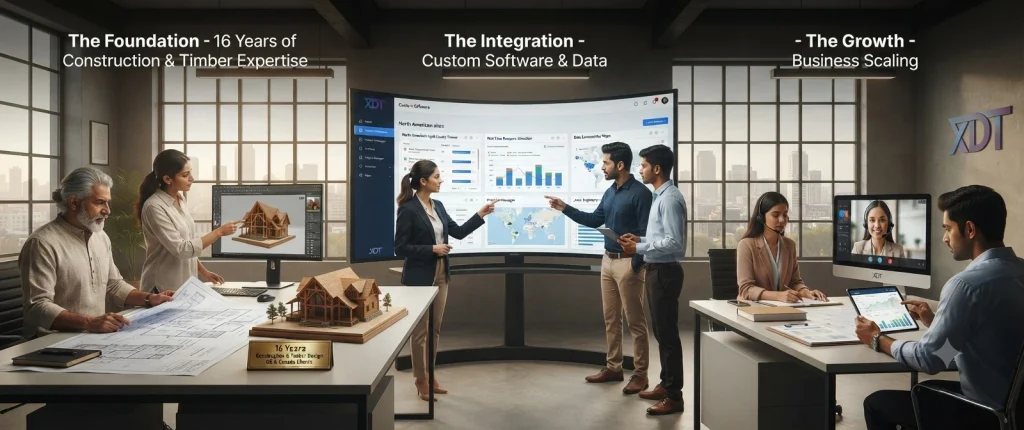
At Xchange Data Technologies (XDT), we help businesses explore technology solutions that align with their operational needs—from custom applications and integrations to modernization and digital transformation.
What Is Custom Software Development?
Custom software development is the process of designing and building software specifically for a business or organization. Instead of adapting your processes to fit a ready-made product, the software is designed around your requirements.
A custom solution may include:
- Web applications
- Mobile applications
- Desktop software
- ERP systems
- CRM platforms
- Customer or vendor portals
- Workflow automation tools
- API integrations
- Reporting dashboards
The objective is simple: use technology to solve a specific business problem. XDT’s IT Services include custom development, web and mobile applications, integration services, legacy modernization, and quality assurance.
Signs Your Business May Need Custom Software
Custom software is particularly useful when existing tools begin creating more problems than they solve.
You may want to consider a tailored solution if:
- Employees spend too much time on manual data entry.
- Important information is spread across multiple systems.
- Spreadsheets are becoming difficult to manage.
- Existing software does not match your workflow.
- Reporting requires significant manual effort.
- Your business needs better integration between applications.
- Current systems are limiting growth.
Business process automation can help standardize repetitive workflows, reduce manual errors, improve visibility, and make processes easier to scale.
How Custom Software Can Automate Business Operations
Automating Repetitive Tasks : Many businesses still manage approvals, notifications, reports, orders, and follow-ups manually.
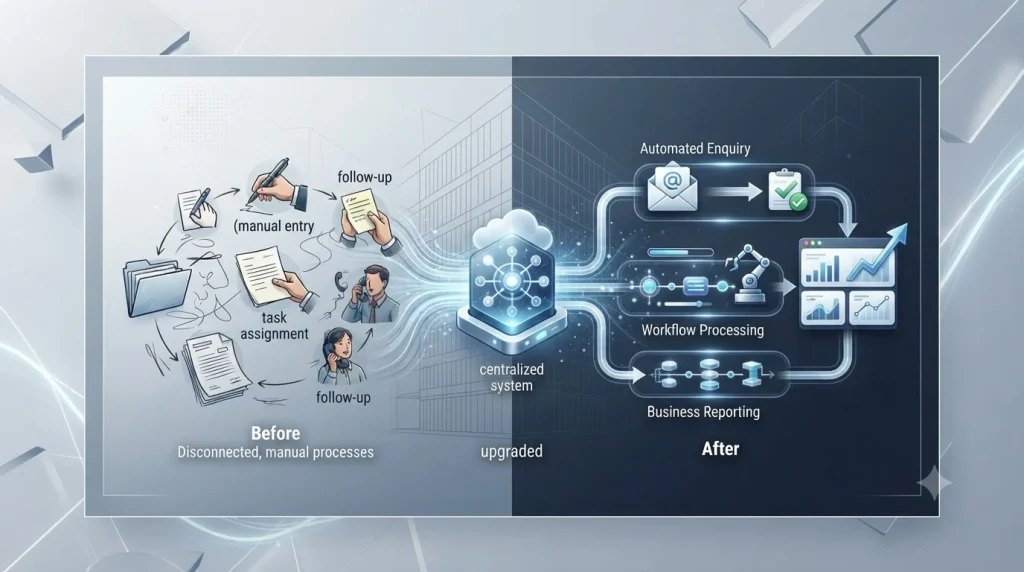
Customer enquiry → Lead assignment → Follow-up reminder → Status tracking → Reporting
By reducing unnecessary manual steps, teams can spend more time on higher-value work.
Centralizing Business Data : Sales information, inventory records, customer details, and operational reports often exist in separate applications. Custom software can bring relevant information into a centralized platform, helping businesses improve visibility and reduce duplicate data entry.
Connecting Existing Systems : Custom development does not always mean replacing everything. Existing applications such as accounting software, CRMs, payment platforms, or other business tools can often be connected through integrations and APIs.
This creates a more connected technology environment and reduces the need for employees to manually move information between systems.

Custom Software vs Off-the-Shelf Software
Off-the-shelf software can be a good choice for businesses with standard requirements. However, growing organizations may eventually need more flexibility.
| Off-the-Shelf Software | Custom Software |
|---|---|
| Designed for a broad market | Built around specific requirements |
| Standard features | Features based on business needs |
| Limited customization | Greater flexibility |
| May require process changes | Can support existing workflows |
| Vendor controls the roadmap | Development priorities align with the business |
The right choice depends on the complexity of your operations, integration requirements, budget, and long-term plans.
Types of Custom Software for Growing Businesses
Businesses in Sangli operate across manufacturing, engineering, retail, healthcare, professional services, and other industries. Their technology requirements can vary significantly.
Common custom solutions include:
Custom ERP Systems : A tailored ERP can connect areas such as inventory, sales, procurement, production, and reporting into a more unified system.
CRM Solutions : Custom CRM platforms can help businesses manage leads, customers, follow-ups, sales pipelines, and service requests.
Web Applications : Web-based applications can support internal teams, customers, vendors, and partners through centralized and accessible digital platforms.
Mobile Applications : Mobile solutions can be valuable for field employees, service teams, delivery operations, inspections, and customer engagement.
Legacy Software Modernization : Older applications may still support important business operations but become difficult to maintain or extend. Modernization can improve usability, performance, integration, and future scalability.
A Practical Approach to Building Custom Software
Successful software projects should begin with understanding the business—not immediately selecting a technology.
A practical process usually involves:
- Understanding the existing workflow
Identify where delays, repetitive tasks, and inefficiencies occur. - Defining the business problem
Focus on what needs to improve before deciding what should be built. - Prioritizing requirements
Start with essential features and expand as the business evolves. - Designing the solution
Consider users, integrations, security, performance, and scalability. - Development and testing
Build the application and validate it before implementation. - Continuous improvement
Monitor how the system performs and introduce improvements when required.
Why Scalability Matters
A growing business may eventually need to support:
- More employees
- Additional locations
- Higher transaction volumes
- New services
- Third-party integrations
- Mobile access
- Advanced reporting
When scalability is considered during the planning stage, businesses can reduce the need to repeatedly replace systems as they grow.
For organizations planning broader technology improvements, custom software can also become part of a larger digital transformation strategy.
Why Choose a Local Software Development Partner in Sangli?

Working with a local technology partner can make business discussions and requirement analysis more accessible. However, local presence should be combined with broader technical capabilities.
XDT brings together experience across IT services, engineering design, digital marketing, and offshore delivery. Learn more about XDT and its approach to delivering technology and business solutions.
Our capabilities extend beyond application development. Businesses can explore:
- IT Services
- Engineering Design & Take-Off Services
- Digital Marketing Services in Sangli
- Horizon Delivery Centre
This broader capability allows businesses to work with a technology partner that understands different aspects of digital and operational growth.
How to Choose the Right Custom Software Development Company
Before selecting a development partner, consider the following:
Business Understanding : The technology team should understand your operational challenges before recommending a solution.
Technical Capability : Look for experience with application development, integrations, architecture, testing, and modernization.
Communication : Clear communication throughout the project helps manage expectations, priorities, and changes.
Scalability : The software should be able to evolve as your business requirements change.
Long-Term Support : Software requires updates, maintenance, security improvements, and future enhancements.
The right development partner should support the business beyond the initial launch.
Build Software Around Your Business
Generic software can be useful, but it may not always support the unique way your organization operates.
When manual processes, disconnected systems, and outdated applications begin affecting productivity, custom software can provide a more flexible solution.
For businesses looking for custom software development in Sangli, the focus should be on solving real operational problems—not simply adding new technology.
At XDT, we combine business understanding with technology capabilities to help organizations build solutions that support automation, integration, and long-term growth.
Frequently Asked Questions
1. What is custom software development?
Custom software development involves building an application specifically around a business’s unique requirements, workflows, and objectives.
2. How can custom software help automate my business?
It can automate repetitive tasks, approvals, notifications, reporting, data entry, and workflows while connecting different systems.
3. Is custom software suitable for small businesses?
Yes. Businesses can begin with essential features and expand the software as their requirements grow.
4. Can custom software integrate with existing applications?
Yes. Depending on the available systems and APIs, custom software can connect applications and reduce manual data transfer.
5. How long does custom software development take?
The timeline depends on the project’s complexity, features, integrations, and testing requirements.
6. Why choose XDT for custom software development in Sangli?
XDT provides capabilities across custom software development, web and mobile applications, integration services, modernization, quality assurance, and digital transformation.