

The gaming industry has evolved far beyond entertainment. Modern video games combine sophisticated software engineering, artificial intelligence, computer graphics, physics simulations, audio technologies and complex digital environments to create experiences that were difficult to imagine just a decade ago.
One of the most anticipated examples of this evolution is Grand Theft Auto VI (GTA 6), developed by Rockstar Games.
Scheduled for release on November 19, 2026, for PlayStation 5 and Xbox Series X | S, GTA VI takes players back to Vice City and the fictional state of Leonida. Its trailers and official development updates have showcased an ambitious digital environment featuring detailed characters, realistic surroundings, complex interactions and an extensive world.
But behind an experience like this is something even more interesting: the technology and engineering required to bring a massive digital world to life.
For software developers, technology enthusiasts and businesses, GTA 6 offers an opportunity to understand how advanced engineering principles can create sophisticated digital experiences.
Let’s explore seven important technologies and engineering disciplines that help make modern open-world games possible.
1. Advanced Game Engines and Software Architecture
At the foundation of a modern video game is its game engine.
A game engine provides the underlying technology required to manage graphics, physics, animations, audio, user interactions and other gameplay systems.
Instead of developing every feature independently, development teams use integrated systems that allow different components to work together.
For a large-scale open-world game, this requires careful software architecture, efficient resource management and coordination between numerous interconnected systems.
The engineering challenges include:
- Managing complex game systems without compromising performance.
- Coordinating different gameplay and environmental components.
- Handling large quantities of assets and data.
- Maintaining consistent behaviour across different gameplay situations.
- Optimizing software for specific hardware platforms.
These principles are not limited to gaming. Enterprise applications, business automation platforms and large software products also depend on well-designed architectures.
Business takeaway: A scalable software architecture makes it easier to develop, maintain and expand complex digital solutions.
2. Advanced Graphics, Rendering and Lighting Technology

One of the most noticeable aspects of GTA VI is its visual presentation.
Modern graphics technology combines several techniques to produce realistic environments, including advanced rendering, lighting calculations, shadows, reflections, textures and material simulation.
Rockstar’s official technical information highlights platform-specific visual capabilities, including ray-traced shadows on PlayStation 5 Pro and PlayStation Spectral Super Resolution (PSSR).
These technologies help improve visual clarity and environmental presentation.
Some important graphics technologies include:
- Real-time rendering: Generates visual scenes as the player interacts with the environment.
- Ray tracing: Simulates how light interacts with surfaces to produce realistic lighting effects.
- Texture mapping: Adds detailed surface appearances to buildings, vehicles, clothing and other objects.
- Global illumination: Models how light spreads and interacts throughout an environment.
- Image upscaling: Uses advanced techniques to improve perceived image quality while managing hardware resources.
Creating realistic graphics is not simply about making objects look attractive. It requires balancing visual quality, processing power and performance.
Business takeaway: The same principles of performance optimization and efficient resource management are valuable when developing modern web applications, 3D visualization tools and business software.
3. Artificial Intelligence and Intelligent NPC Behaviour

Artificial intelligence is another important technology in modern game development.
Non-player characters (NPCs) are the people and characters controlled by the game rather than the player.
In older games, NPC behaviour often relied on simple predefined movements and repetitive responses. Modern games aim to make these characters feel more believable through sophisticated behavioural systems.
Rockstar’s development discussions about its previous games and GTA VI have highlighted more detailed NPC interactions, contextual responses and environmental awareness.
These experiences can involve several engineering techniques:
- Behaviour trees and decision-making systems.
- Navigation and pathfinding algorithms.
- Context-sensitive interactions.
- Character state management.
- Scripted dialogue and behavioural responses.
It is important to distinguish these technologies from generative AI. Rockstar has not publicly confirmed that GTA VI uses generative AI to control its NPCs.
Nevertheless, the evolution of intelligent characters demonstrates how AI-related engineering can make digital environments more interactive.
Business takeaway: Intelligent automation and context-aware software can help businesses create more responsive applications and improve customer experiences.
4. 3D Modelling and Large-Scale Digital Environments
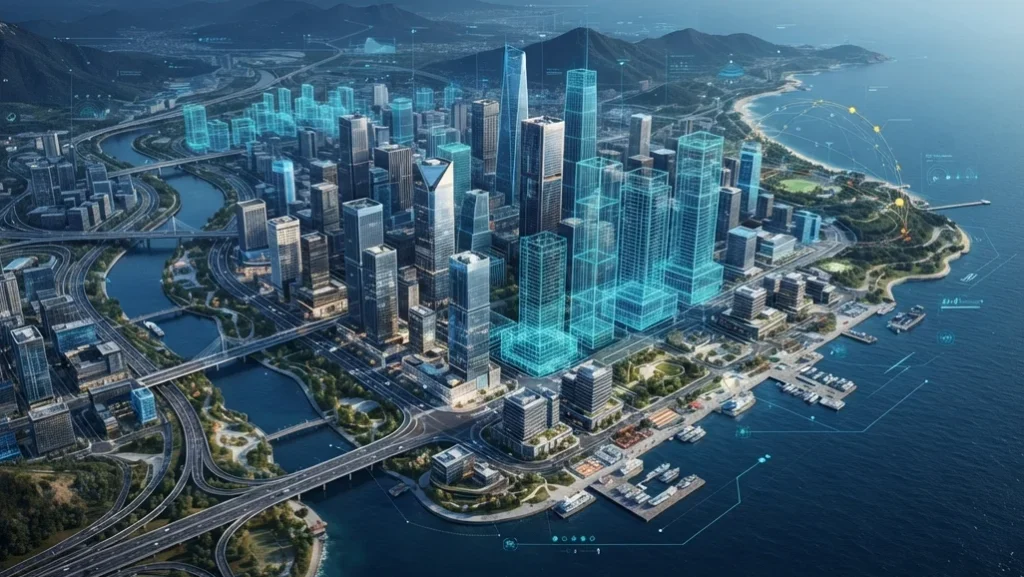
An open-world game is much more than a collection of buildings and roads.
It is a complex digital environment containing streets, interiors, vehicles, landscapes, businesses, lighting, objects and characters.
Creating a believable environment requires a combination of 3D modelling, digital asset creation, environmental design and software systems that organize and render those assets efficiently.
Rockstar’s development coverage has highlighted the extensive research and environmental detail involved in recreating the atmosphere of Vice City and its surrounding locations.
Important technologies and processes include:
- 3D modelling and digital asset creation.
- Environmental texturing and material design.
- Terrain and landscape generation.
- Spatial organization of digital objects.
- Level design and environmental optimization.
- Asset streaming and resource management.
These technologies also have applications outside the gaming industry.
Architecture, construction engineering, product visualization and digital twin development use similar 3D modelling and visualization principles.
Business takeaway: Digital environments can help organizations visualize projects, communicate ideas and understand complex physical spaces before implementation.
5. Character Animation and Realistic Movement Simulation
Realistic characters require much more than detailed visual models.
Their movements, expressions, body language and interactions must feel natural within the environment.
This is where character animation and simulation technologies become essential.
Modern animation pipelines can combine motion capture, skeletal animation, procedural techniques, physics-based movement and carefully designed animation systems.
For a large open-world game, developers must also manage the interactions between characters, objects and surrounding environments.
Some important techniques include:
- Skeletal animation and character rigging.
- Motion capture and animation blending.
- Facial animation and expression systems.
- Procedural movement.
- Physics-based object interactions.
- Animation state management.
Rockstar’s development coverage has also discussed the extensive work involved in creating believable characters and populated environments.
Business takeaway: Animation and simulation technologies are increasingly valuable in product demonstrations, architectural visualization, training environments and interactive digital experiences.
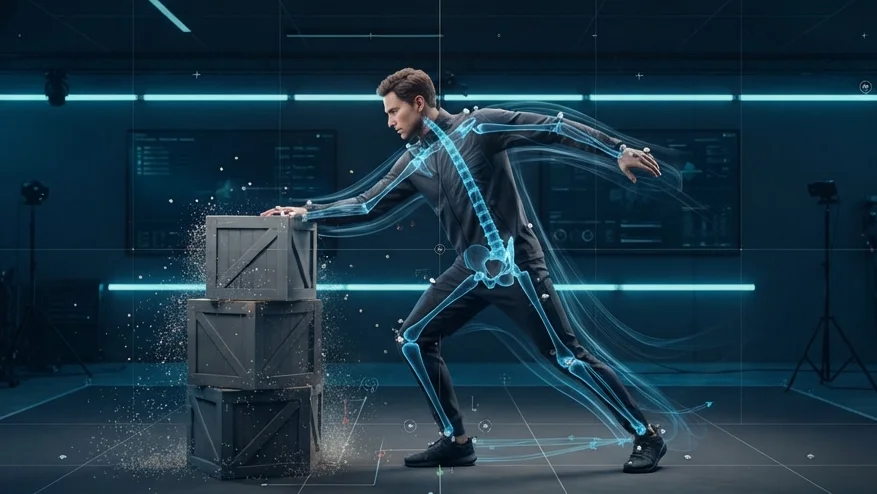
6. Physics Engines and Interactive World Systems
A convincing digital environment should respond to the actions taking place inside it.
Physics engines help simulate the behaviour of objects and their interactions with the surrounding environment.
For example, when an object moves, collides with another object or responds to an external force, physics calculations help determine what happens next.
Modern interactive experiences may involve:
- Collision detection.
- Rigid-body physics.
- Vehicle movement simulation.
- Object interactions.
- Environmental effects.
- Real-time calculations.
In a complex open-world environment, these systems must operate alongside graphics, animations, AI and other gameplay mechanics.
The challenge is not just making interactions realistic. It is ensuring that they remain responsive and computationally efficient.
Business takeaway: Simulation and physics technologies can support engineering visualization, virtual prototyping, product testing and other applications where understanding real-world behaviour matters.
7. Advanced Audio, Spatial Sound and Immersive Experiences
Sound is an essential part of creating a believable digital environment.
Modern games use sophisticated audio systems to make environments feel more realistic and responsive.
These systems can combine environmental sound, dialogue, music, sound effects and spatial audio technologies.
Rockstar’s official GTA VI information has highlighted enhanced spatial audio support on PlayStation 5, including integration with Tempest 3D Audio.
Some important audio technologies include:
- Spatial audio rendering.
- Environmental sound simulation.
- Dynamic audio mixing.
- Adaptive music systems.
- Real-time sound processing.
- Audio synchronization.
These technologies help create a stronger connection between the player and the digital environment.
The same principles can be applied to interactive training platforms, virtual demonstrations, simulation systems and immersive business experiences.
Business takeaway: A well-designed digital experience combines visual quality, sound, interaction and usability rather than focusing on appearance alone.
What Businesses Can Learn From the Technology Behind GTA 6
Although GTA VI is designed primarily for entertainment, the engineering principles behind large-scale games have relevance across many industries.
Businesses developing modern digital solutions can learn several important lessons:
1. Build scalable systems: Applications should be designed to accommodate changing requirements and increasing demand.
2. Prioritize performance: Software should deliver a responsive experience without consuming unnecessary resources.
3. Invest in user experience: Interactive systems should be intuitive, accessible and designed around real user requirements.
4. Use automation intelligently: AI and automation can improve efficiency when applied to appropriate business processes.
5. Focus on integration: Different technologies and software components should work together reliably.
6. Test continuously: Complex software requires consistent testing, optimization and quality assurance throughout development.
These principles apply to custom software, enterprise platforms, mobile applications and digital transformation initiatives.
How XDT Connects Technology With Business Innovation
At Xchange Data Technologies (XDT), we believe that technology creates the greatest value when engineering capabilities solve real business problems.
Our IT services cover custom software development, web and mobile applications, desktop solutions, business automation, API integration and other technology requirements.
Our capabilities also extend to construction engineering and digital modelling, where visualization and technical accuracy play important roles.
The technologies behind modern digital experiences demonstrate how software engineering, design, automation and innovation can work together to create meaningful solutions.
Whether a business needs a custom application, an integrated software platform or a technology solution designed around its operations, the foundation remains the same: understanding the problem and applying the right engineering approach.
Explore XDT’s IT Services to learn how technology can support your business goals.
Final Thoughts
Grand Theft Auto VI represents more than another major video game release. It provides an interesting example of how multiple engineering disciplines come together to create an advanced digital experience.
From graphics rendering and artificial intelligence to 3D modelling, animation, physics and spatial audio, modern game development demonstrates the possibilities of combining different technologies into one sophisticated system.
These same engineering principles are influencing industries far beyond gaming, including construction, education, healthcare, manufacturing and enterprise software.
As technology continues to evolve, the boundaries between entertainment, simulation and practical business applications will become increasingly interconnected.
The future of technology is not just about building better software. It is about creating smarter, more immersive and more meaningful digital experiences.
XDT – Where Technology Meets Business.