
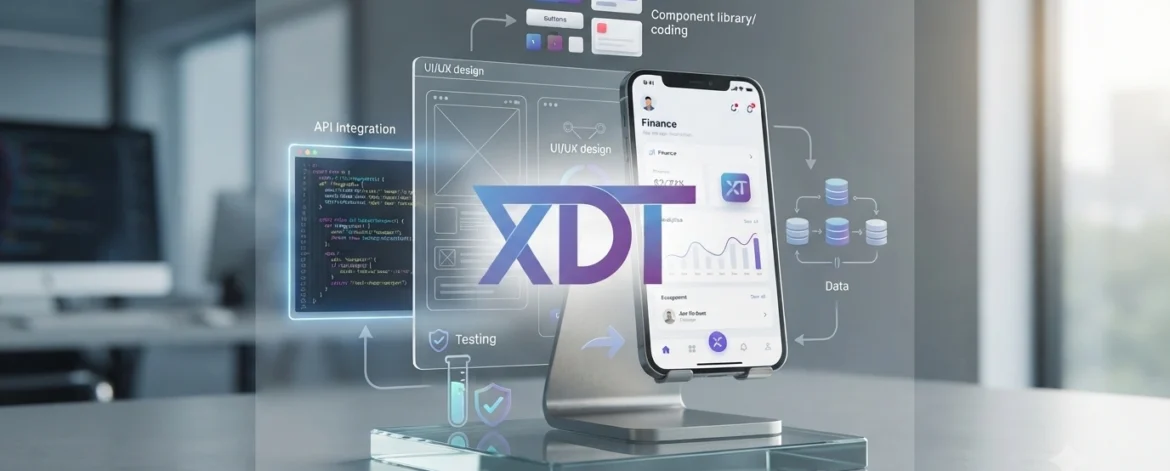
Mobile apps have become an important way for businesses to connect with customers, support employees, and deliver digital services. From customer-facing applications to internal business tools, a well-designed mobile application can make everyday processes faster and more convenient.
Mobile app development is the process of designing, building, testing, and maintaining software for mobile devices such as smartphones and tablets.
But creating a successful app involves more than writing code. Businesses need to consider the users, platform, features, security, performance, and long-term maintenance before development begins.
What Is Mobile App Development?

Mobile app development involves creating applications specifically for mobile devices. Depending on the project, an application may be developed for Android, iOS, or multiple platforms. A mobile app can work independently on a device or communicate with backend services through APIs to access data and business functionality.
Common examples include:
- Business and productivity apps
- E-commerce applications
- Customer service apps
- Healthcare and wellness applications
- Finance and payment applications
- IoT-connected mobile applications
- Internal enterprise applications
The right approach depends on the application’s purpose, target users, required features, and technical requirements.
Types of Mobile App Development
Native App Development
Native applications are developed specifically for a particular operating system, such as Android or iOS. This approach can provide strong performance and access to platform-specific capabilities. Native development can be useful when an application requires extensive device integration or platform-specific functionality.
Cross-Platform App Development
Cross-platform development allows teams to build applications that target multiple operating systems from a shared codebase. This approach can reduce duplicated development work and may be suitable for businesses that need to reach both Android and iOS users while maintaining development efficiency.
The choice between native and cross-platform development should be based on factors such as performance, functionality, development resources, and long-term maintenance.
Key Stages of Mobile App Development
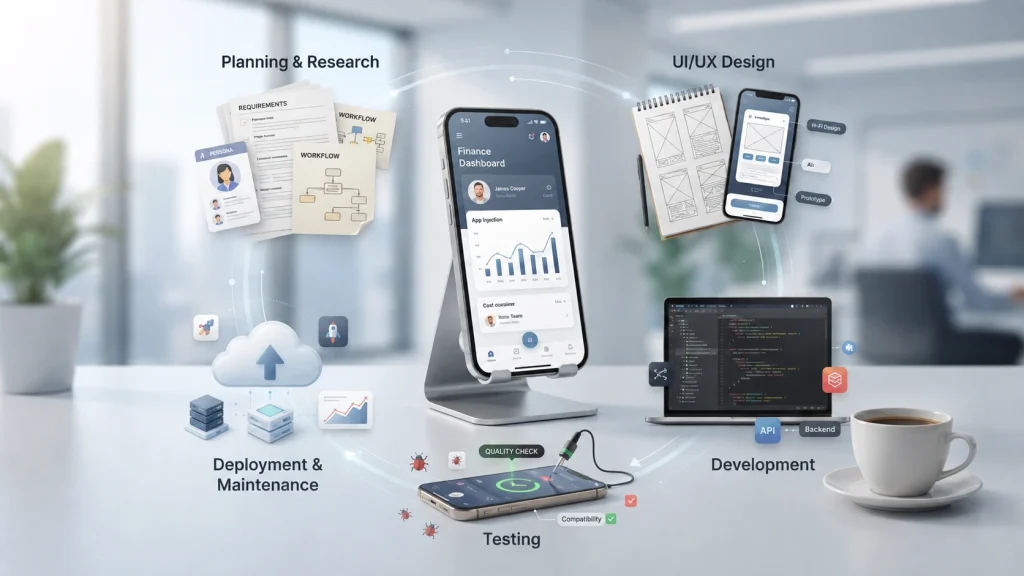
A structured development process helps turn an initial idea into a functional application.
1. Planning and Research
The first step is understanding the problem the application needs to solve. This includes identifying target users, defining requirements, researching competitors, and establishing the core features. Clear planning can also help control project scope and reduce unnecessary development work.
2. UI/UX Design
The design stage focuses on how the application looks and how users interact with it. Wireframes and prototypes can help teams evaluate navigation and user flows before development begins. Making changes during this stage is generally easier than changing major functionality after coding has progressed.
3. Development
Developers then build the application’s frontend and backend components. This may involve databases, APIs, authentication, business logic, third-party integrations, and other services required by the application. For applications that rely on online data or business systems, reliable backend architecture is particularly important.
4. Testing
Testing helps identify functional problems, compatibility issues, performance concerns, and security weaknesses before launch. Testing should cover different devices, screen sizes, operating-system versions, network conditions, and important user workflows.
5. Deployment and Maintenance
After testing, the application can be prepared for release and deployment. However, development does not necessarily end after launch. Applications often require ongoing maintenance, security updates, performance improvements, bug fixes, and feature enhancements based on user feedback.
What Should Businesses Consider Before Building an App?
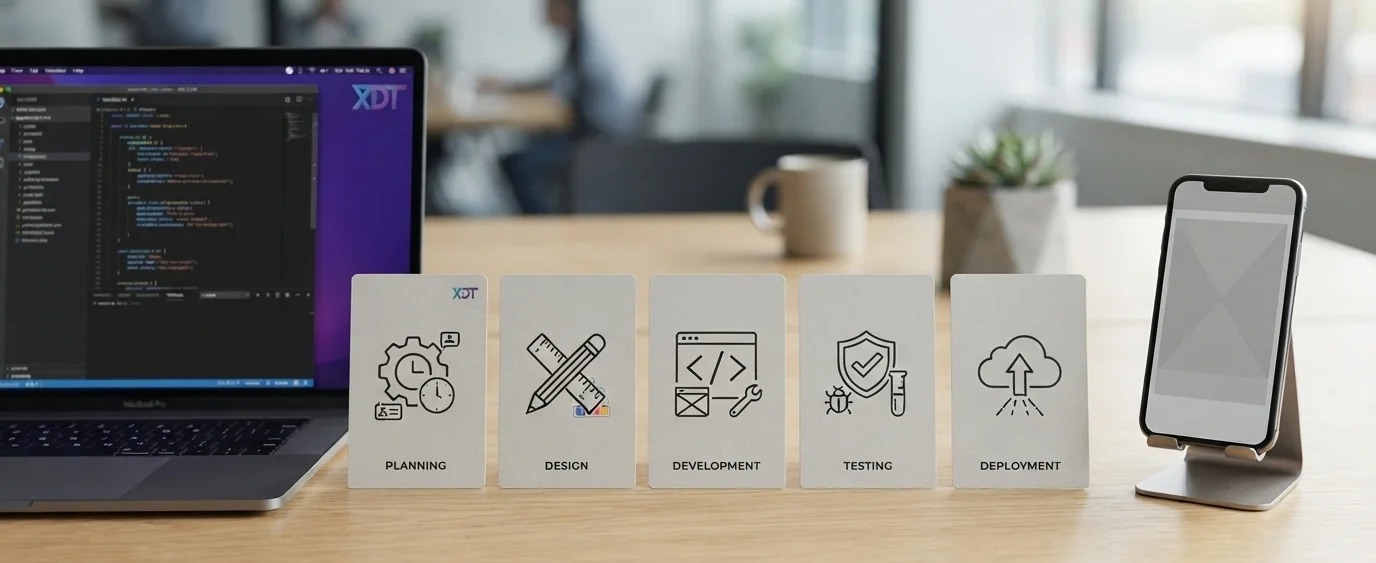
Before starting a mobile app development project, businesses should answer a few important questions:
- Who will use the application?
- What problem will it solve?
- Which platforms are required?
- What features are essential for the first release?
- Does the application need backend or API integration?
- How will user data be protected?
- How will the application be tested and maintained?
Answering these questions early can create a clearer development roadmap and help ensure that technology decisions support actual business requirements.
Building the Right App for Your Business
Successful app development combines planning, user experience, technology, security, testing, and continuous improvement. There is no single development approach that works for every business. The right solution depends on the application’s goals and the people who will use it.
Businesses looking to develop a mobile application can explore XDT’s IT Services to understand its broader technology capabilities and solutions.
For more background, see Mobile App Development on Wikipedia.
Conclusion
Mobile app development is a structured process that goes beyond coding. From defining requirements and designing user experiences to development, testing, deployment, and maintenance, every stage contributes to the quality of the final application.
By starting with a clear business objective and choosing the appropriate development approach, businesses can create mobile applications that are useful, scalable, secure, and easier to maintain over time.
Frequently Asked Questions About Mobile App Development
Mobile app development is the process of designing, building, testing, and maintaining applications for mobile devices such as smartphones and tablets. Apps can be developed specifically for Android or iOS, or built using cross-platform technologies.
The development time depends on the app’s features, design, integrations, number of platforms, and complexity. A simple application may take a few weeks, while a feature-rich business application can require several months of planning, development, testing, and deployment.
Native app development creates applications specifically for platforms such as Android or iOS. Cross-platform development uses a shared codebase to build applications for multiple platforms. The right approach depends on the project’s performance requirements, budget, timeline, and target users.
Many business and consumer applications require a backend to manage user accounts, databases, authentication, APIs, payments, notifications, and other dynamic features. The backend and mobile application work together to provide a complete application experience.
There is no fixed cost because pricing depends on factors such as app complexity, features, UI/UX requirements, integrations, security, platforms, and ongoing maintenance. Defining requirements clearly before development helps create a more accurate project estimate.