
India’s cybersecurity agency, CERT-In, issued a critical advisory on October 9, 2026, warning financial organisations about cyberattacks targeting payment and disbursement APIs. The warning highlights how attackers can exploit exposed systems and stolen credentials to initiate unauthorised fund transfers. Read the official CERT-In advisory.
Why Is Payment API Security Important?
Payment APIs connect financial applications with banks, payment gateways and other services. When these connections are poorly secured, attackers may exploit vulnerabilities or compromised credentials to bypass application-level checks and manipulate transactions.
According to CERT-In, observed attacks have targeted non-banking financial companies (NBFCs), digital lending platforms, fintech firms, payment service providers and wallet operators.
A successful attack can result in financial losses, data exposure, operational disruption and damage to customer trust. For organisations handling sensitive financial information, cybersecurity must be a continuous priority.
5 Ways Financial Companies Can Strengthen Cybersecurity
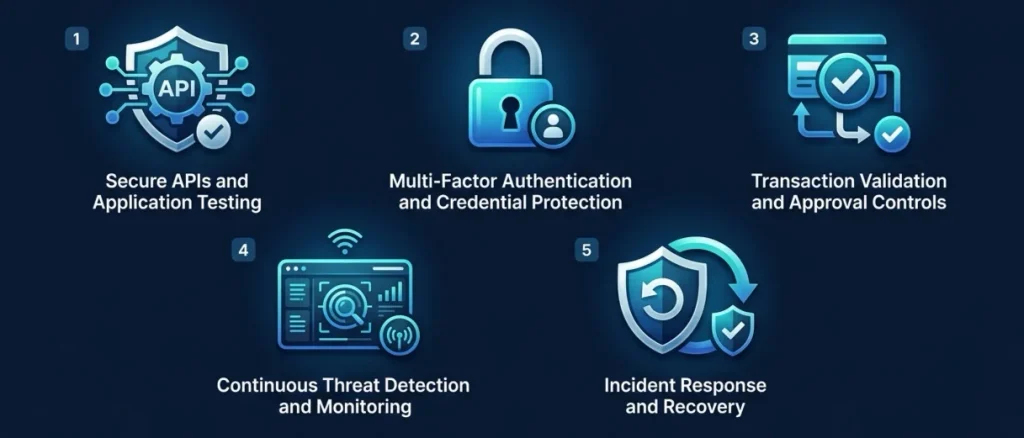
1. Secure APIs and applications: Maintain an inventory of active APIs, disable unused endpoints and conduct regular vulnerability assessments and penetration testing.
2. Strengthen authentication: Enforce multi-factor authentication (MFA), protect privileged accounts and replace vulnerable, long-lived credentials with stronger authentication methods.
3. Validate every transaction: Apply transaction limits, verify beneficiaries and use maker-checker approvals for sensitive fund transfers. Never rely solely on an application’s internal checks.
4. Monitor suspicious activity: Centralised logging, real-time transaction monitoring and threat detection can help identify unusual access patterns and potentially fraudulent transfers.
5. Prepare for incidents: Establish an incident response plan, preserve security logs, rotate compromised credentials and ensure that teams know how to contain attacks and restore operations.
These measures should complement a broader security programme covering networks, cloud infrastructure, employee awareness and third-party integrations.
How XDT Supports Cybersecurity
At Xchange Data Technologies (XDT), we recognise the importance of protecting business systems, applications and digital assets as organisations become increasingly technology-driven.
XDT’s cybersecurity offerings include penetration testing and ethical hacking, vulnerability and attack surface management, threat detection and security monitoring, incident response and forensics, application and cloud security, and security compliance support.
The right combination of preventive controls, continuous monitoring and incident readiness can help businesses identify weaknesses before they become costly problems.
Conclusion
The latest CERT-In warning is a reminder that securing financial transactions requires more than protecting login screens. APIs, credentials, transaction validation and monitoring must work together to reduce cyber risk.
Financial organisations should review their security controls regularly and take a proactive approach to protecting their systems, data and customers.
Explore XDT Cybersecurity Solutions to learn more about strengthening your organisation’s digital security.